

Services/Modeling & Simulation
Modeling & Simulation
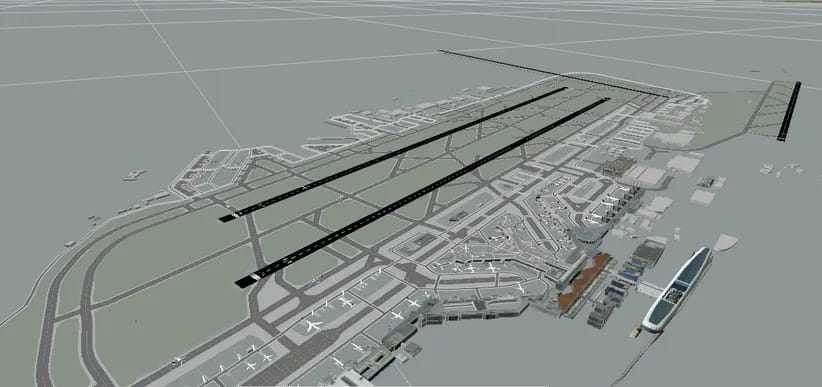
Airfield Simulation
Cignus is one of the most experienced AirTOp and TAAM simulation teams in the industry, having modeled airports ranging from small GA fields to the world's busiest international hubs. Our airfield simulations capture runway configuration alternatives, taxiway network optimization, gate assignment strategies, apron congestion analysis, and de-icing facility planning with validated models that reflect real-world ATC procedures and airline operating practices.
Runway Configuration Studies
Capacity and delay analysis for alternative runway use strategies under VFR and IFR conditions.
Taxiway Network Optimization
Hot-spot identification, one-way flow analysis, and high-speed exit taxiway evaluation.
Gate Assignment Planning
DDFS-based gate demand analysis, remote parking strategies, and pushback conflict resolution.
Construction Phasing
Operational impact assessment of phased construction and temporary closures.

Airspace Simulation
Our airspace simulation capability covers terminal and en route environments, using AirTOp and TAAM to evaluate proposed procedure designs, sector capacity limits, arrival/departure sequencing strategies, and airspace restructuring alternatives. We have modeled some of the world's most complex airspace environments including the New York N90 TRACON, Dubai TMA, Moscow TMA, and Istanbul TMA.
Procedure Evaluation
Simulation-based validation of SID/STAR/approach procedure designs against real traffic demand.
Sector Capacity Analysis
Controller workload assessment and sector throughput optimization.
Conflict Detection
Airspace conflict heat maps, minimum separation analysis, and safety case support.
Multi-Airport TMA Modeling
Coordinated simulation of multiple airports within shared terminal airspace.
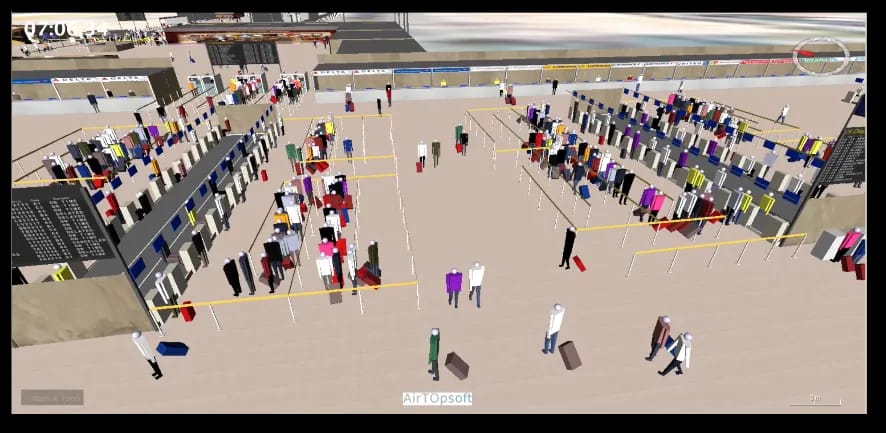
Passenger Terminal Simulation
Cignus delivers passenger terminal simulation studies that optimize facility sizing, processor configurations, and passenger flow patterns. Our terminal models incorporate check-in, security screening, passport control, boarding, baggage claim, and connecting passenger flows with realistic arrival profiles, dwell-time distributions, and technology adoption assumptions. We have completed Level of Service analyses for major terminals including Chicago O'Hare's new OGT.
Level of Service Analysis
IATA LoS assessment for all terminal processors and circulation areas.
Processor Sizing
Optimal counter, checkpoint, and gate quantities for design-day demand scenarios.
Queue Management
Wait time prediction, queue space requirements, and dynamic resource allocation strategies.
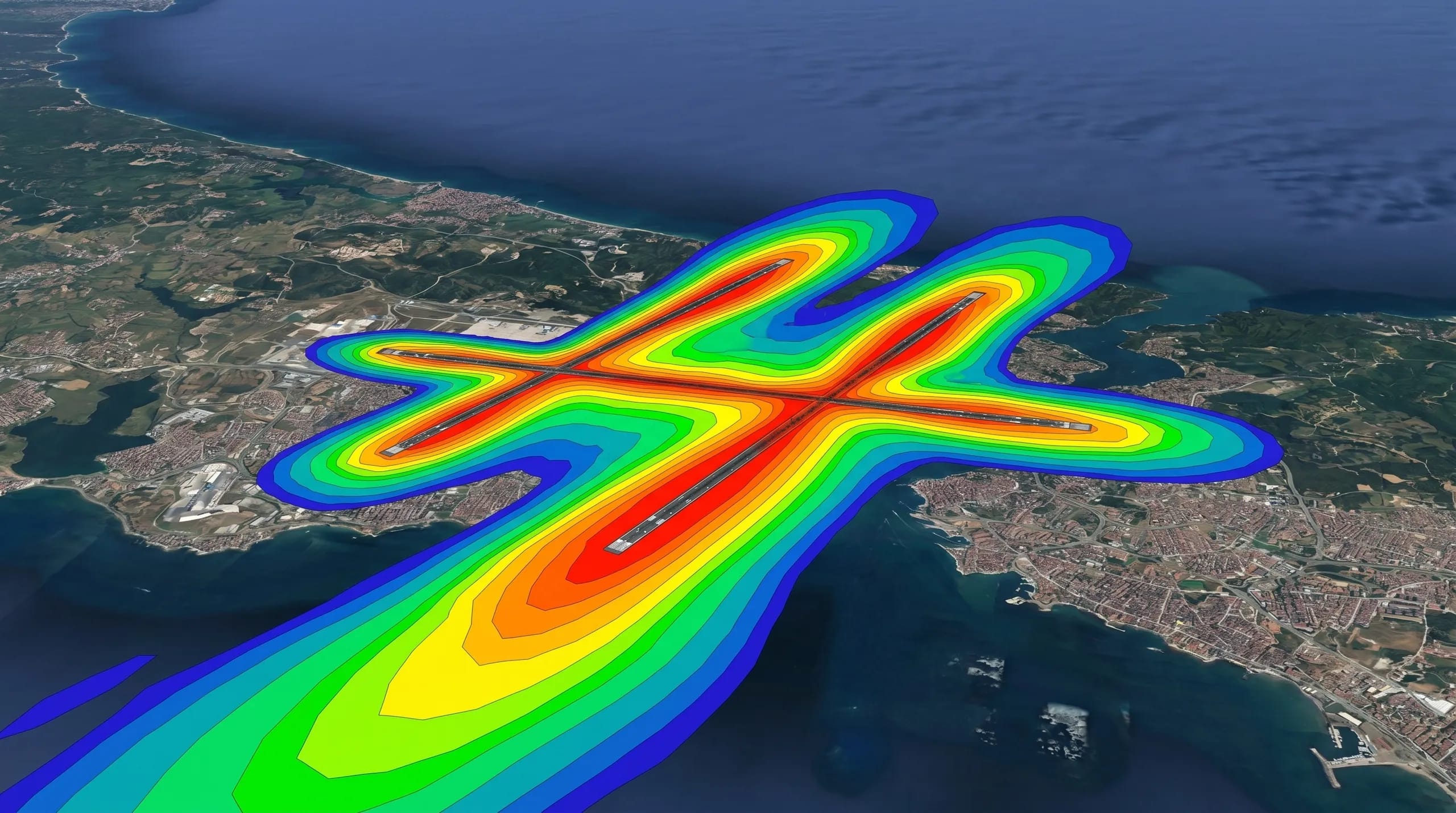
Environmental Modeling (AEDT)
Our environmental modeling team uses the FAA Aviation Environmental Design Tool (AEDT) to produce noise contour analyses, air quality dispersion models, and fuel burn calculations for proposed airport improvements. Unlike generic noise studies, our environmental analyses use actual simulated flight tracks from our TAAM/AirTOp models, producing more accurate and defensible results that withstand regulatory scrutiny.
AEDT Noise Analysis
DNL, CNEL, and supplemental noise metric contour generation.
Flight-Track Integration
Simulation-derived trajectories for more accurate noise exposure modeling.
Emissions Modeling
Aircraft engine emissions dispersion analysis for air quality impact assessments.
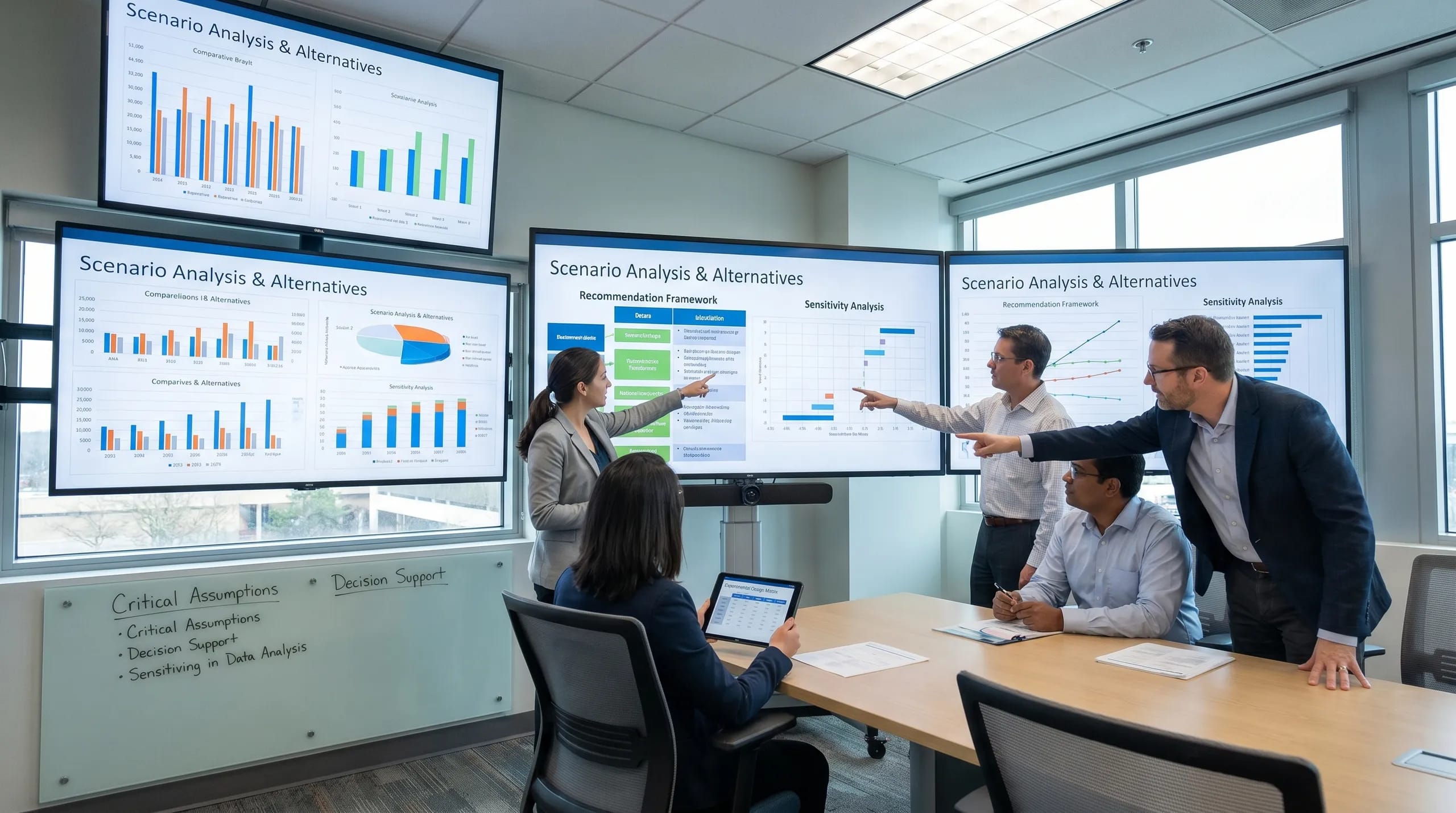
Scenario Analysis & Alternatives
Cignus excels at structured alternatives analysis, systematically comparing multiple development scenarios against consistent performance metrics to support defensible investment decisions. We design simulation experiments with appropriate statistical rigor, run sensitivity analyses to identify critical assumptions, and present results in formats that resonate with decision-makers ranging from airport boards to federal program managers.
Experimental Design
Factorial scenario matrices with controlled variables and consistent metrics.
Sensitivity Analysis
Identification of critical assumptions and their impact on study conclusions.
Decision Support
Clear comparative visualizations and recommendation frameworks for stakeholders.
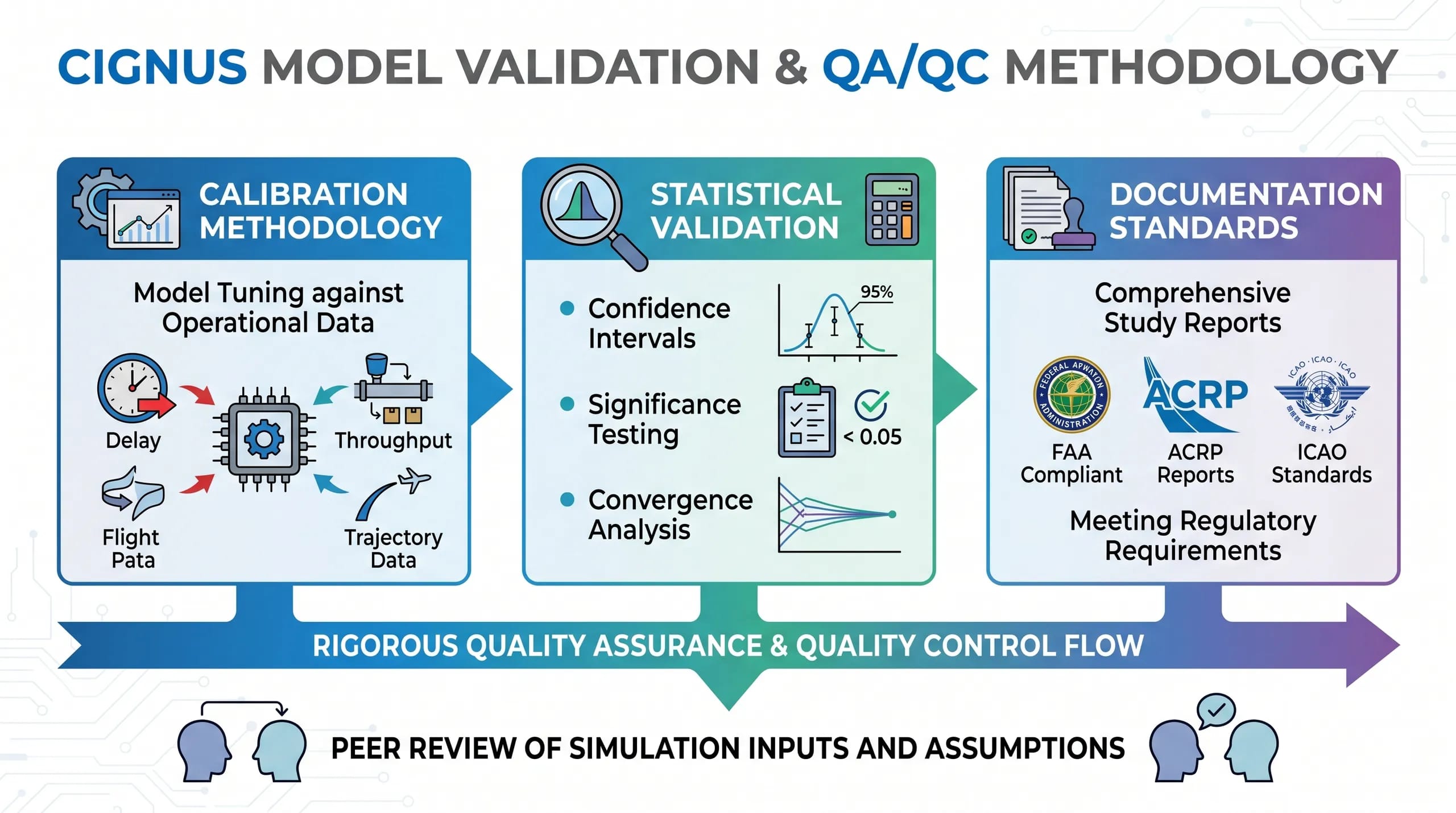
Model Validation & QA/QC
Every Cignus simulation study follows a rigorous quality assurance and quality control methodology that includes model calibration against operational data, peer review of simulation inputs and assumptions, and statistical validation of results. As the lead author of ACRP Synthesis 98: "Simulation Options for Airport Planning," Cignus literally wrote the national reference standard for aviation simulation QA/QC methodology.
Calibration Methodology
Model tuning against operational delay, throughput, and trajectory data.
Statistical Validation
Confidence intervals, significance testing, and convergence analysis for simulation runs.
Documentation Standards
Comprehensive study reports meeting FAA, ACRP, and ICAO documentation requirements.